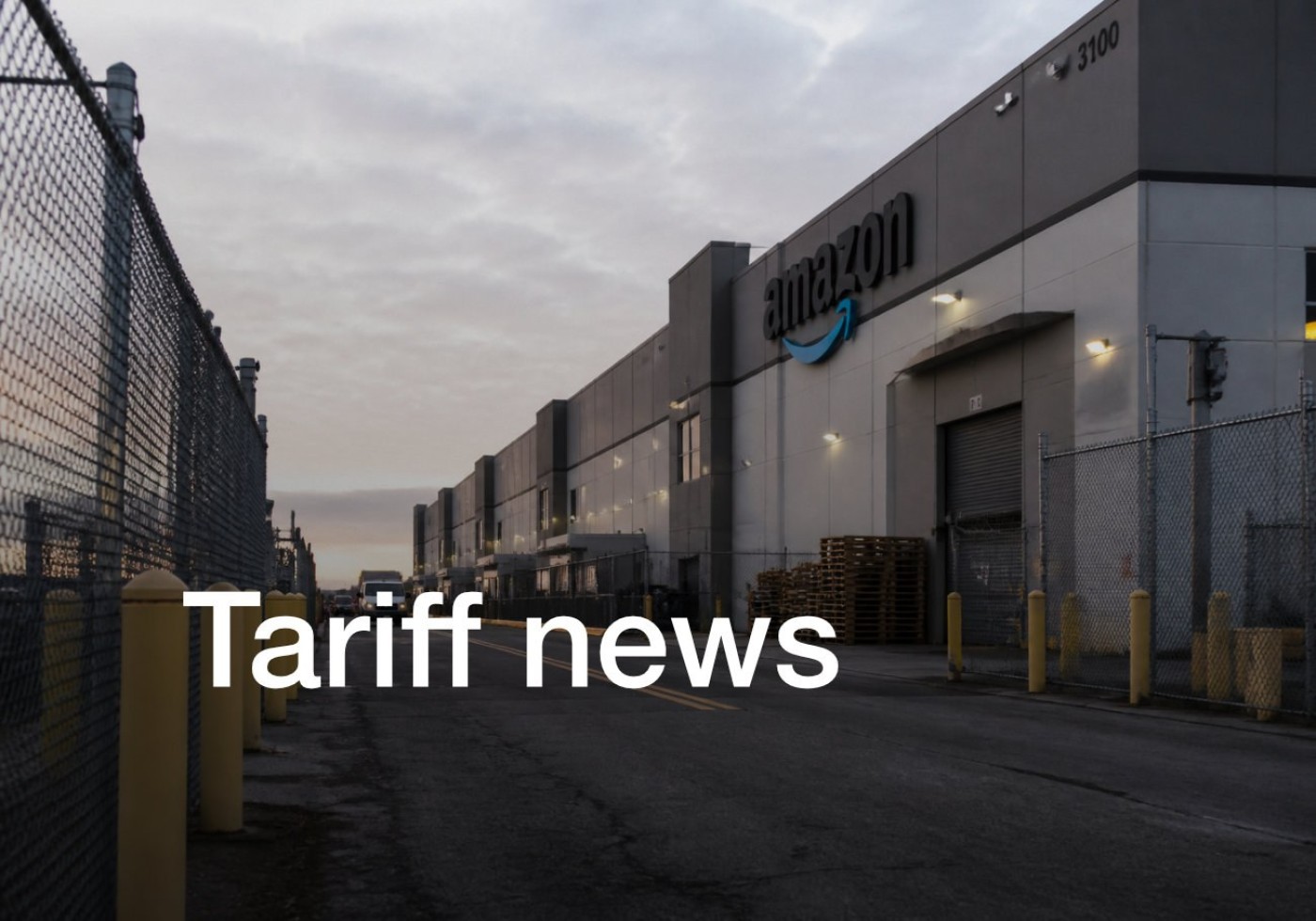
Amazon sellers sourcing products from China may have another major cost risk to watch.
The US Senate has passed the Lindsey O. Graham Sanctioning Russia and Iran Act of 2026, a wide-ranging sanctions package designed to increase economic pressure on Russia and countries continuing to purchase significant quantities of Russian energy.
One provision could have particularly serious consequences for Amazon FBA sellers.
The legislation gives the US President authority to impose additional tariffs of up to 100% on goods imported from certain countries that continue purchasing Russian oil or natural gas. China is not specifically named in the legislation, but current trade data makes it one of the countries most likely to be affected if the measures become law and the tariff powers are used.
That does not mean a 100% tariff on Chinese imports has been introduced.
As of 13 September 2026, the Senate has passed the legislation, but the Senate-amended version has not yet become law. The House Rules Committee is scheduled to consider it on 14 September. The White House has said that if the Senate amendment reaches President Trump in its current form, his advisers would recommend that he sign it.
For Amazon sellers importing from China, however, this is legislation worth understanding now rather than after tariffs are announced.
What Is The New Russia Sanctions Bill?
The Lindsey O. Graham Sanctioning Russia and Iran Act of 2026 is intended to increase pressure on Russia by targeting not only Russian organisations and individuals, but also countries that continue providing a major market for Russian energy.
The Senate passed the amended H.R. 5334 on 7 August 2026 by 86 votes to 11.
Among other measures, the legislation targets Russian financial institutions, officials and the so-called shadow fleet used to move Russian energy.
For Amazon sellers, however, Section 113 is the part that matters most.
It provides for tariffs of up to 100% ad valorem on all goods imported into the United States from qualifying countries. Those countries can include major importers of Russian-origin crude oil or natural gas and countries heavily involved in Russian oil sanctions evasion.
That potentially takes the impact far beyond oil and gas.
If China qualified and the tariff power were exercised against it, the duty could affect ordinary Chinese-manufactured products entering the United States — including products destined for Amazon FBA warehouses.
Is China Definitely Getting A 100% Tariff?
No.
This is the most important point for Amazon sellers to understand.
There is currently no new 100% tariff on all Chinese goods under this legislation.
The bill allows duties to be set at a rate greater than zero and up to 100%, and provides mechanisms for the rate to be adjusted depending on the country's behaviour.
So headlines suggesting that China will automatically receive a 100% tariff are getting ahead of what the legislation actually says.
Several things would still need to happen:
- The legislation must complete the congressional process and become law.
- China would need to meet the relevant criteria.
- The administration would determine the tariff rate.
- The measures could change if China reduced or stopped relevant Russian energy purchases.
- Waivers and other provisions within the legislation could affect implementation.
The potential maximum is 100%.
That is very different from saying 100% is guaranteed.
Why Is China At Risk?
Because China remains one of Russia's most important energy customers.
According to the Centre for Research on Energy and Clean Air, China was the largest global buyer of Russian fossil fuels in August 2026, accounting for 51% of Russia's fossil-fuel export revenue among its five largest buyers.
Crude oil alone represented approximately €5.8 billion of China's Russian fossil-fuel purchases during the month.
Looking over the longer period from December 2022 through August 2026, China purchased around 50% of Russia's crude oil exports tracked by CREA.
That makes China highly relevant to legislation specifically designed to pressure the world's largest purchasers of Russian energy.
India is also a major purchaser, meaning Amazon sellers should not automatically assume moving manufacturing from China to India would eliminate exposure to this particular geopolitical risk.
Would The Tariff Only Apply To Oil From China?
No.
This is where the proposal becomes particularly important for Amazon sellers.
Section 113 refers to raising duties on all goods imported into the United States from a qualifying country, rather than simply placing a tariff on that country's oil or energy exports.
That means a qualifying tariff could potentially affect products such as:
- Electronics.
- Home and kitchen products.
- Toys.
- Clothing.
- Tools.
- Beauty accessories.
- Sports equipment.
- Furniture.
- Private-label consumer products.
In other words, many of the categories commonly sourced by Amazon sellers from Chinese manufacturers.
The legislation is designed to make continuing to buy Russian energy economically painful for the countries involved.
The knock-on effect is that US importers could end up sharing that pain.
Would This Be On Top Of Existing China Tariffs?
Potentially, yes — and this is one of the most significant details in the Senate-passed text.
Section 113 states that a duty imposed under the section would be in addition to other applicable duties, fees, taxes or charges, including duties imposed under existing US trade laws.
That means Amazon sellers should not think of this simply as replacing an existing tariff with a 100% tariff.
For products already subject to duties when imported from China, a new sanction-related tariff could sit on top of other applicable import costs.
The exact final duty on any individual product would still depend on its classification, country of origin and whatever tariff rate was ultimately imposed.
This is why sellers should speak to a customs broker before making financial decisions based on headline percentages alone.
What Could A 100% Tariff Actually Mean For An Amazon Seller?
Consider a simplified example.
An Amazon seller buys a product from a Chinese manufacturer with a customs value of $10 per unit.
Under normal circumstances, that $10 product still has additional costs before it reaches the customer:
- Import duties.
- International freight.
- Customs clearance.
- FBA inbound costs.
- Amazon referral fees.
- Fulfilment fees.
- Storage.
- PPC advertising.
- Returns.
- Other operating costs.
Now imagine an additional 100% ad valorem tariff applies.
A 100% duty calculated against a $10 customs value would mean approximately another $10 of import duty per unit, before taking account of other applicable duties and charges.
US Customs and Border Protection explains that duty is normally assessed using the price paid for the imported goods rather than the eventual US retail selling price, subject to customs valuation rules and applicable additions.
So a product that previously cost $10 at the import stage could suddenly carry a further $10 tariff liability.
That can completely change the economics of an Amazon listing.
A $29.99 Amazon Product Could Suddenly Look Very Different
Imagine a simplified private-label product selling for $29.99.
Before the proposed tariff, the seller might have something resembling:
Product cost: $10
Selling price: $29.99
Gross difference before Amazon fees, shipping, advertising and other costs: $19.99
Introduce another $10 of import duty and that gross difference falls dramatically before Amazon has even taken its fees.
The seller then has only a few realistic options:
- Accept significantly lower margins.
- Increase the retail price.
- Negotiate a lower factory cost.
- Reduce advertising spend.
- Change suppliers.
- Move production to another country.
- Redesign the product to lower manufacturing costs.
For some high-margin products, the business may remain viable.
For low-margin private-label products, a large additional tariff could make the existing model unprofitable almost overnight.
Who Actually Pays The Tariff?
This is another area where headlines can cause confusion.
A tariff on goods entering the United States is not simply a bill sent to the Chinese government.
For Amazon inventory entering the US, the Importer of Record is responsible for complying with import requirements and paying assessed customs duties.
Amazon's own Global Logistics guidance states that the seller or another appointed entity must act as the Importer of Record and that Amazon will not act as the IOR for an FBA shipment.
In practice, therefore, Amazon sellers importing their own Chinese-manufactured inventory could feel the additional cost directly.
Suppliers may reduce their prices in response to weaker US demand, and currency movements or negotiations could absorb some of the pressure.
But sellers should not assume their Chinese supplier will simply pay a new US tariff for them.
Could Sellers Just Increase Their Amazon Prices?
Some will.
But increasing prices creates another problem: conversion.
Suppose your product currently sells for $29.99 and competes against several similar listings.
If maintaining your margin requires increasing the price to $39.99, customers may begin choosing cheaper alternatives.
Competitors sourcing from countries unaffected by the tariff could suddenly have a significant advantage.
That could create a major reshuffling of Amazon search results.
Sellers with:
- Higher margins.
- Strong brands.
- Better review profiles.
- Unique products.
- Diversified manufacturing.
may have more room to absorb or pass on the additional costs.
Commodity sellers competing largely on price could face much greater difficulty.
Reviews Could Become Even More Important
Tariffs might appear unrelated to Amazon reviews, but there is an important connection.
If sellers are forced to increase prices, customers will need a stronger reason to choose their product over cheaper competitors.
That's where trust becomes increasingly valuable.
A product with hundreds or thousands of genuine reviews and a strong rating may be better positioned to justify a higher price than a virtually identical listing with very little customer feedback.
Amazon sellers cannot control international trade policy.
They can control how strong their listings and brands are before conditions change.
Building a consistent review strategy, improving listings and strengthening customer trust can therefore become even more important during periods of rising costs.
Should Amazon Sellers Stop Sourcing From China?
Not based on this bill alone.
China remains one of the world's largest and most sophisticated manufacturing centres, with enormous supplier networks, infrastructure and manufacturing expertise.
Moving production isn't as simple as finding another factory.
Changing manufacturing countries can involve:
- New tooling.
- Product testing.
- Quality-control changes.
- Different minimum order quantities.
- Longer development periods.
- New freight routes.
- Different import regulations.
- Different material suppliers.
- Higher manufacturing costs.
Sellers should therefore avoid making panic-driven decisions based on a tariff that has not yet been imposed.
But doing nothing may not be sensible either.
Should Sellers Look At Vietnam, India Or Other Countries?
Diversification is worth exploring, but sellers need to investigate the full picture.
India, for example, is often mentioned as an alternative manufacturing base to China.
However, India was the second-largest buyer of Russian fossil fuels in August 2026, according to CREA, importing approximately €4.8 billion during the month.
So moving production from China to India purely because of this legislation could potentially exchange one source of exposure for another.
Countries such as Vietnam, Mexico and other manufacturing hubs may be worth investigating depending on the product category, but production costs, existing US tariffs, manufacturing capability and logistics all need to be considered.
The smarter strategy is supply-chain diversification, rather than simply replacing "China" with another country on the purchase order.
What Should Amazon Sellers Do Now?
There is no reason to panic, but there is every reason to model the risk.
If a significant percentage of your Amazon inventory is manufactured in China, start by identifying which ASINs would be most vulnerable to a major increase in landed cost.
Run several scenarios.
What happens if your additional import cost increases by:
- 10%?
- 25%?
- 50%?
- 100%?
Then calculate what retail price you would need to maintain your current contribution margin.
You may discover that some products could comfortably absorb an increase while others would immediately become unviable.
That information is valuable before any tariff is introduced.
Talk To Your Supplier Before You Need To
Amazon sellers should also consider opening conversations with Chinese suppliers now.
Not because a 100% tariff is guaranteed, but because suppliers themselves will be watching developments closely.
Questions worth discussing include:
- Could manufacturing costs be reduced?
- Are alternative materials available?
- Can packaging be redesigned to reduce costs?
- Does the supplier operate factories outside China?
- Could part of production move elsewhere?
- Could minimum order quantities be renegotiated?
Large Chinese manufacturers increasingly operate or partner with facilities in other countries.
Understanding your supplier's options before a crisis develops gives you more flexibility.
Don't Over-Order Simply Because Tariffs Might Be Coming
Another temptation is to import a huge amount of inventory before any possible tariff takes effect.
That can also be dangerous.
Over-ordering creates its own problems:
- Higher storage fees.
- Cash tied up in inventory.
- Long-term FBA storage exposure.
- Greater risk if demand falls.
- Reduced ability to change products or suppliers.
Inventory planning should be based on realistic demand and confirmed regulatory developments rather than fear.
Keep watching the legislation, model the potential cost and make decisions based on evidence.
This Could Change Quickly
This article reflects the position as of 13 September 2026.
The Senate has passed the legislation, but the Senate-amended bill has not yet become law.
The House Rules Committee is scheduled to consider the Senate amendments to H.R. 5334 on 14 September 2026.
The White House has also formally supported the Senate amendment and said presidential advisers would recommend signing it if presented in its current form.
That means Amazon sellers sourcing from China should take the proposal seriously.
But they should also distinguish between what could happen and what has happened.
There is currently no new blanket 100% China tariff under this legislation.
What Happens Next?
The key developments to watch are:
- Whether the House approves the Senate-amended legislation.
- Whether the final legislation changes before passage.
- Whether President Trump signs it.
- Which countries are ultimately identified under Section 113.
- What tariff rates the administration selects.
- Whether targeted countries reduce Russian energy purchases in response.
China's position as the world's largest purchaser of Russian fossil fuels means it will remain central to the discussion.
But the final commercial impact on Amazon sellers could range from relatively limited to extremely significant depending on how those powers are ultimately used.
Amazon Sellers Need To Prepare, Not Panic
Amazon sellers have dealt with supply-chain shocks before.
COVID disruption, container shortages, inflation and previous US-China tariffs all changed the economics of importing products.
This could become another major change.
The sellers best positioned to deal with it will be those who understand their numbers.
Know:
- Your true landed cost.
- Your import duty exposure.
- Your contribution margin per ASIN.
- The maximum price customers will accept.
- Which suppliers and countries could provide alternatives.
- How much inventory you actually need.
Political headlines are outside your control.
Your preparation isn't.
Key Takeaways
The proposed US sanctions legislation could have significant consequences for Amazon sellers importing products from China, but a 100% tariff has not currently been imposed.
What sellers need to know is:
- The US Senate passed the Lindsey O. Graham Sanctioning Russia and Iran Act of 2026 by 86–11.
- The Senate-passed bill allows tariffs of up to 100% on all goods from certain major purchasers of Russian oil or natural gas and countries involved in sanctions evasion.
- China is particularly exposed because it is currently the largest buyer of Russian fossil fuels.
- The legislation states that Section 113 duties would be additional to other applicable duties and charges.
- A 100% rate is the maximum authorised rate, not an automatic tariff that has already been introduced.
- Amazon FBA sellers importing inventory into the US can ultimately bear import duty costs through their Importer of Record arrangements.
- Sellers should start modelling different tariff scenarios and investigating supply-chain alternatives without making panic-driven decisions.
- The House is due to take the next significant procedural step on the legislation on 14 September 2026.
For Amazon sellers, the lesson is broader than one piece of legislation.
Building a resilient Amazon business means understanding more than sales, PPC and keywords. Manufacturing costs, tariffs, supply chains, inventory and customer trust can all determine whether a product remains profitable.
If you currently source heavily from China, now is the time to understand your exposure — not necessarily to abandon your suppliers, but to make sure you have a plan if the economics of importing into the US change dramatically.