Amazon FBA (Fulfilment by Amazon) is one of the most popular ways to start or scale an online business, but is it really worth it?
This article breaks down what FBA is, the real pros and cons, how much it costs, who it suits best, and what new and existing sellers need to know before committing. Whether you’re just starting or looking to optimise your current FBA business, this guide offers a grounded, up-to-date view of whether FBA is the right model for you.
What is Amazon FBA and how does it work?
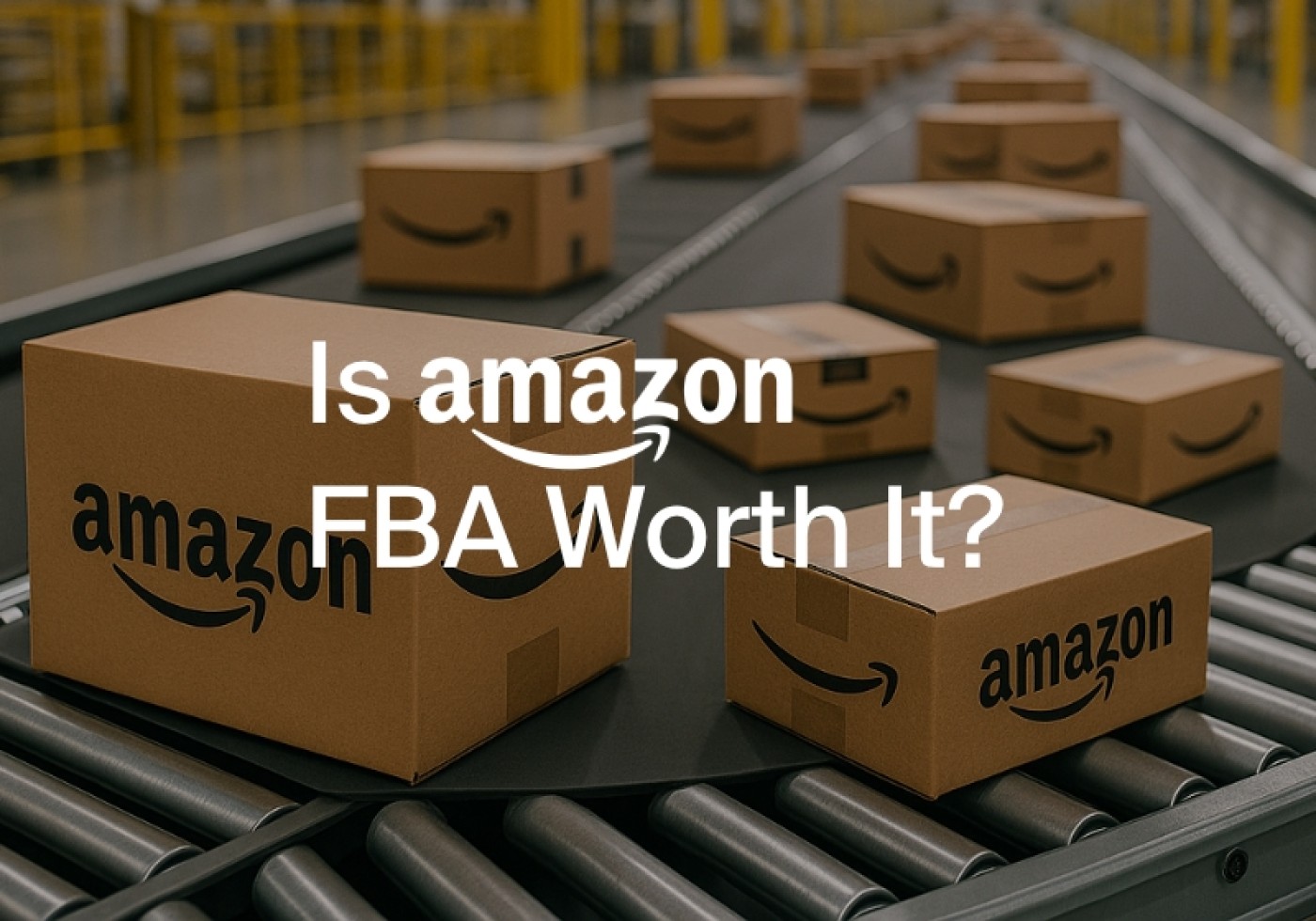
Amazon FBA means Amazon handles the picking, packing, and shipping of your orders — along with customer service and returns. As a seller, you send your products to Amazon’s fulfilment centres, and when a customer places an order, Amazon ships it on your behalf.
What Amazon handles with FBA:
- Storage of your products in their warehouses
- Packing and shipping when a sale is made
- 24/7 customer service for orders
- Processing returns and refunds
- Fast Prime-eligible delivery for your products
This model is designed to let sellers focus on product sourcing, marketing, and growing their brand — while Amazon handles logistics.
Pros of using Amazon FBA
Prime eligibility and trust
FBA listings automatically get the Prime badge, which increases visibility and trust. Prime shoppers convert at a higher rate and often prefer faster delivery options. This alone can be a huge advantage for sellers looking to scale.
Hands-off fulfilment
Amazon takes care of the entire fulfilment process. There’s no need to pick and pack orders yourself or manage a warehouse team. This is especially useful for remote sellers or those without physical storage space.
Amazon handles customer service
Dealing with questions, tracking updates, and returns can be time-consuming. FBA removes that responsibility, offering Amazon-standard support for your customers.
Access to global marketplaces
With FBA, you can expand into Amazon marketplaces like Europe, Canada, or Australia, using the same infrastructure. Amazon handles international logistics through its global FBA programme.
Scalable operations
As your sales grow, Amazon's warehouse network allows you to scale without needing to hire staff or rent space. FBA is ideal for sellers who want to grow without increasing operational complexity.
The downsides and costs of Amazon FBA
FBA fees can add up
FBA fees are based on the size, weight, and category of your product — and include storage and fulfilment. While predictable, they can eat into your margins if not carefully managed. Oversized products, slow sellers, or poor packaging choices can lead to losses.
Storage penalties and long-term fees
If inventory sits too long, Amazon charges long-term storage fees. This can happen easily if you overstock or launch a product that doesn’t move. Tools like Amzigo’s Product Analysis feature can help you avoid this by monitoring inventory levels, sales velocity, and restock needs to prevent stockouts and excess inventory.
Less control over fulfilment
If you want to use custom packaging, include inserts, or maintain more brand control, FBA limits those options. Amazon’s standard packaging is generic, and branding opportunities are restricted unless you're using programs like Amazon Transparency or Brand Registry.
Returns policy favours buyers
Amazon has a generous return policy, and FBA sellers are bound to it. You may see more returns than with your own fulfilment methods, especially in competitive categories.
Prep and compliance can be strict
FBA has strict packaging and labelling requirements. Mistakes in prep can result in rejected shipments or extra charges. Sellers need to learn the rules — or pay third-party services to handle prep correctly.
Who is FBA best suited for?
Amazon FBA is ideal for:
- Sellers launching private label products
- Brands wanting to scale quickly across multiple regions
- Sellers without access to storage or fulfilment space
- Entrepreneurs focused on product and marketing — not logistics
- Businesses targeting Prime members and fast delivery options
FBA isn’t always ideal for:
- Handmade or highly custom products
- Very low-margin items
- Sellers wanting full control over packaging and fulfilment
- Sellers with slow-moving or oversized stock
Can you make money with Amazon FBA in 2025?
Yes — but only with the right product, margin, and systems. FBA is a logistics service, not a guaranteed business model. Success depends on product research, pricing, marketing, and reviews.
Many profitable sellers use FBA as the backbone of their operations. But they also use tools to protect margins, avoid overstocking, and consistently request product reviews using solutions like Amzigo’s Automated Review Centre. Consistent reviews help establish social proof and boost conversion — both critical to competing on FBA.
Tips to succeed with Amazon FBA
- Start with a small batch: Validate your product before scaling
- Use a profit calculator: Include all FBA fees before pricing
- Optimise listings early: Use high-quality images, A+ content, and keywords
- Monitor inventory: Use tools like Amzigo’s Product Analysis to avoid stockouts and long-term fees
- Automate review requests: Leverage Amzigo to stay compliant and consistent
- Track advertising ROI: FBA is often used alongside Sponsored Product ads — track performance carefully
Conclusion
Amazon FBA isn’t a guaranteed win, but it can be an incredibly powerful fulfilment model if used correctly. It takes logistics off your plate, provides faster delivery to your customers, and allows you to scale a brand without renting space or hiring staff.
The key is to treat FBA like a service — not a strategy. You still need to choose the right product, manage inventory, build reviews through compliant tools like Amzigo, and optimise your listings to stand out.
If you're serious about building a long-term Amazon business and you're ready to manage your margins and data — FBA is absolutely worth considering.